
By Tim Trudell
The brown mare stares as the two men chat about the importance of equine therapy. After a few minutes, one of the men looks again, the mare is still staring at him.
"She's looking at me," the man said to Doug Widow. "Do I come over?"
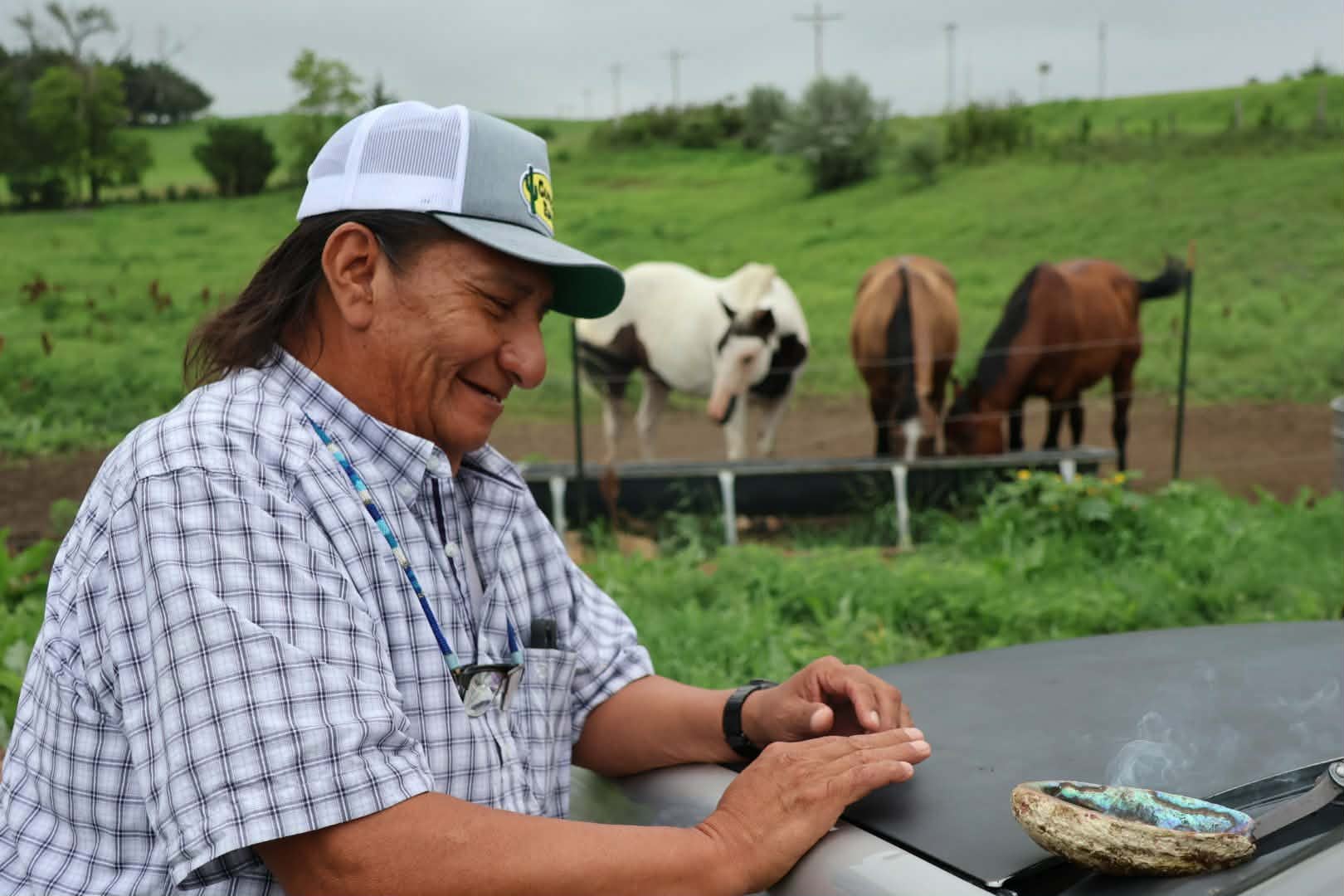
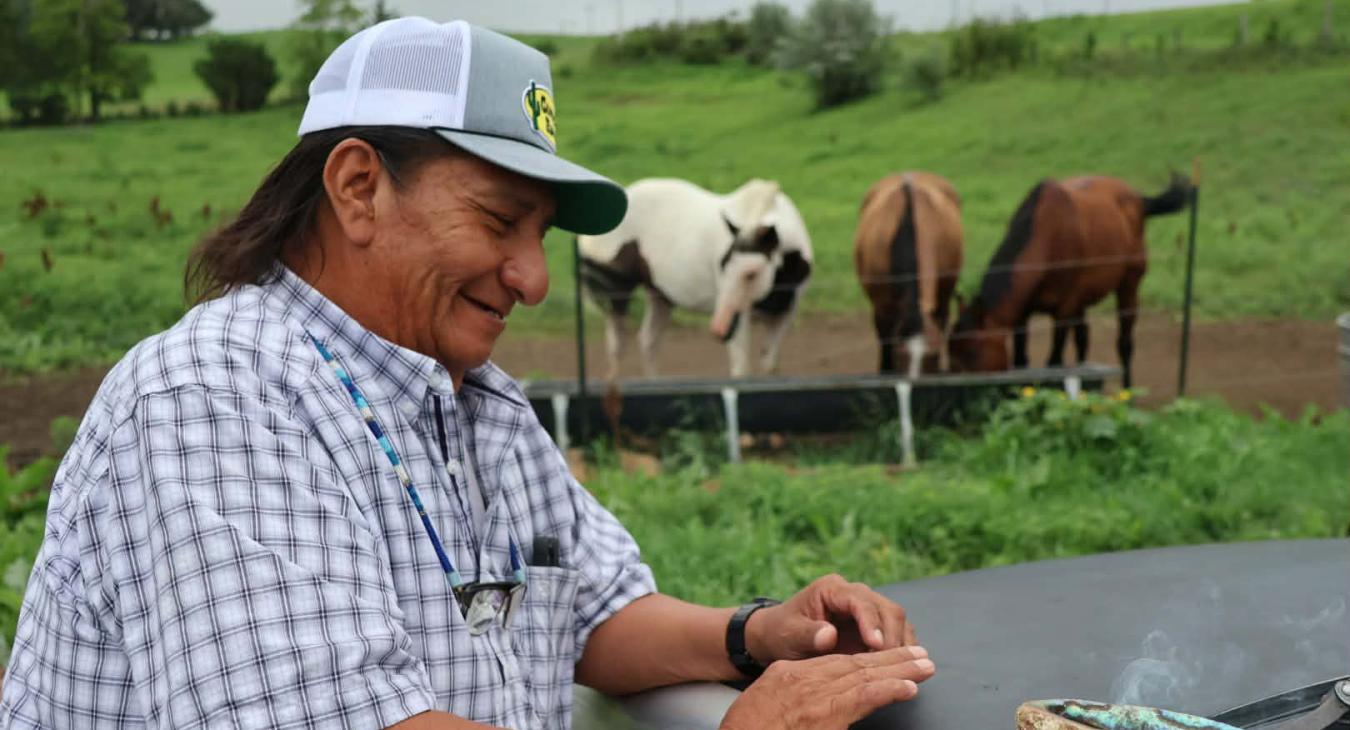
Widow looks up from the front of the pick-up on which he's leaning.
"Before you go in, face the west and I'll say a prayer," he said.
Afterward, he entered the corral Widow keeps his horses to begin several minutes of equine therapy to address personal trauma that has impacted his life for several years.
Widow, a Lakota citizen, has lived on the Santee Dakota (Sioux) reservation since 2012. He primarily practices equine therapy with Native Americans seeking to overcome alcohol and drug addiction.
"They knew you were coming four days ago," Widow said. "They've been agitated. They know you have unresolved trauma."
Intergenerational trauma is common among Native Americans. The Indigenous experience of historical suffering is considered a source of intergenerational trauma responses, as well as a possible factor for long-term distress and substance abuse, according to the National Institute of Health.
Intergenerational trauma can include post-traumatic stress disorder (PTSD), cultural identification, substance dependence, anxiety disorders and conduct disorder/antisocial personality disorder (ASPD), a NIH study reported.
Usually, the horses are in the corral on the southern edge of Santee. People see them whenever they drive into town.
After visiting for about 30 minutes, Widow decided to head into the woods and see if they were going to come to the corral.
About 10 minutes later, Widow appeared with three horses walking behind him.
"I asked if they were going to come up and they let me know they were ready," he said.
The healing process is unique. Rather than try to pair a person with a horse, the horse decides who it will help, Widow said.
"They sense the trauma. They know which one is best-suited to handle it," he said.
In order to address the trauma the brown mare felt in him, the man, a Santee tribal citizen, began by running his hand over her in a clockwise manner. Each side of the horse represents the stages of a person's life: right is infancy, left is adolescence.
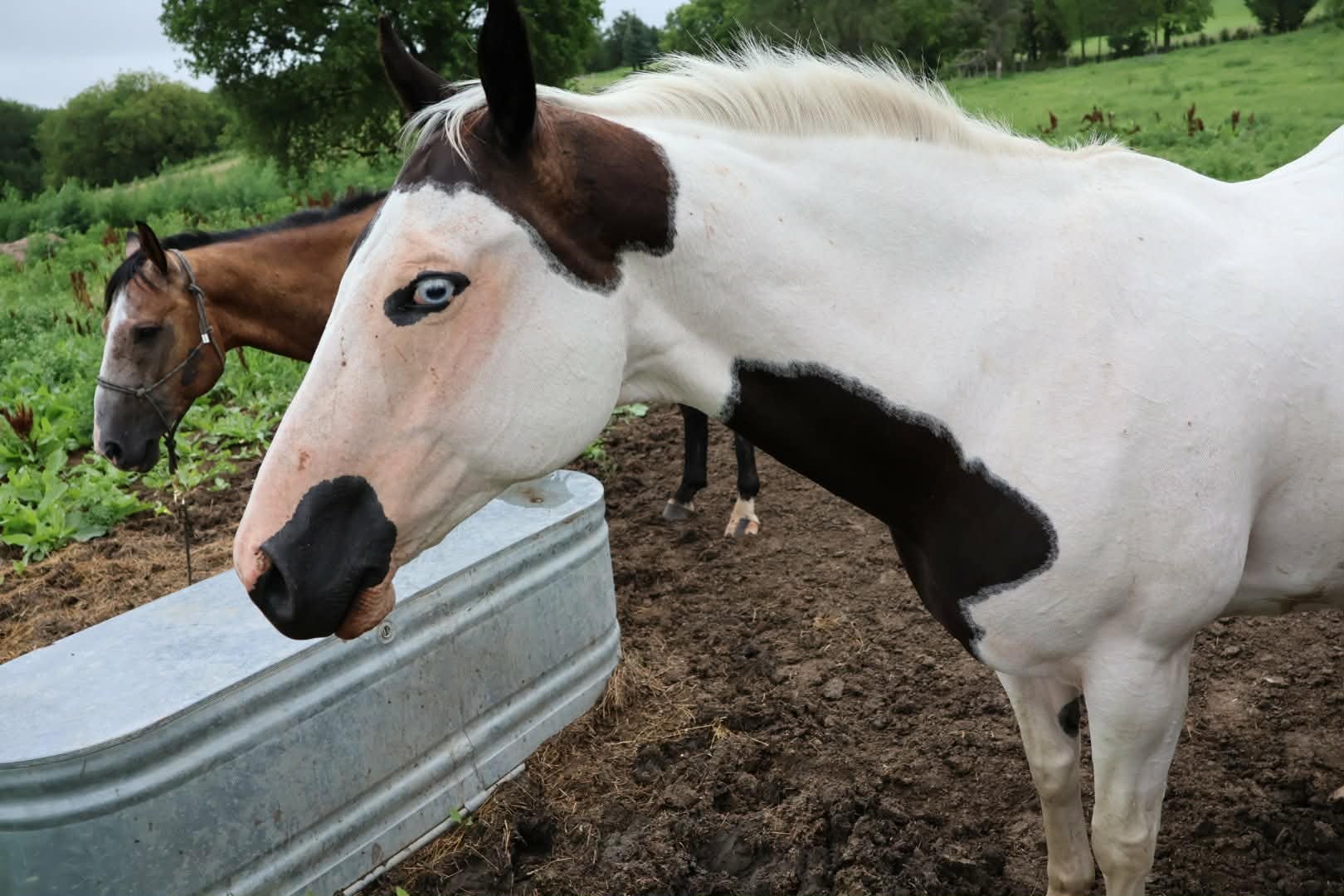
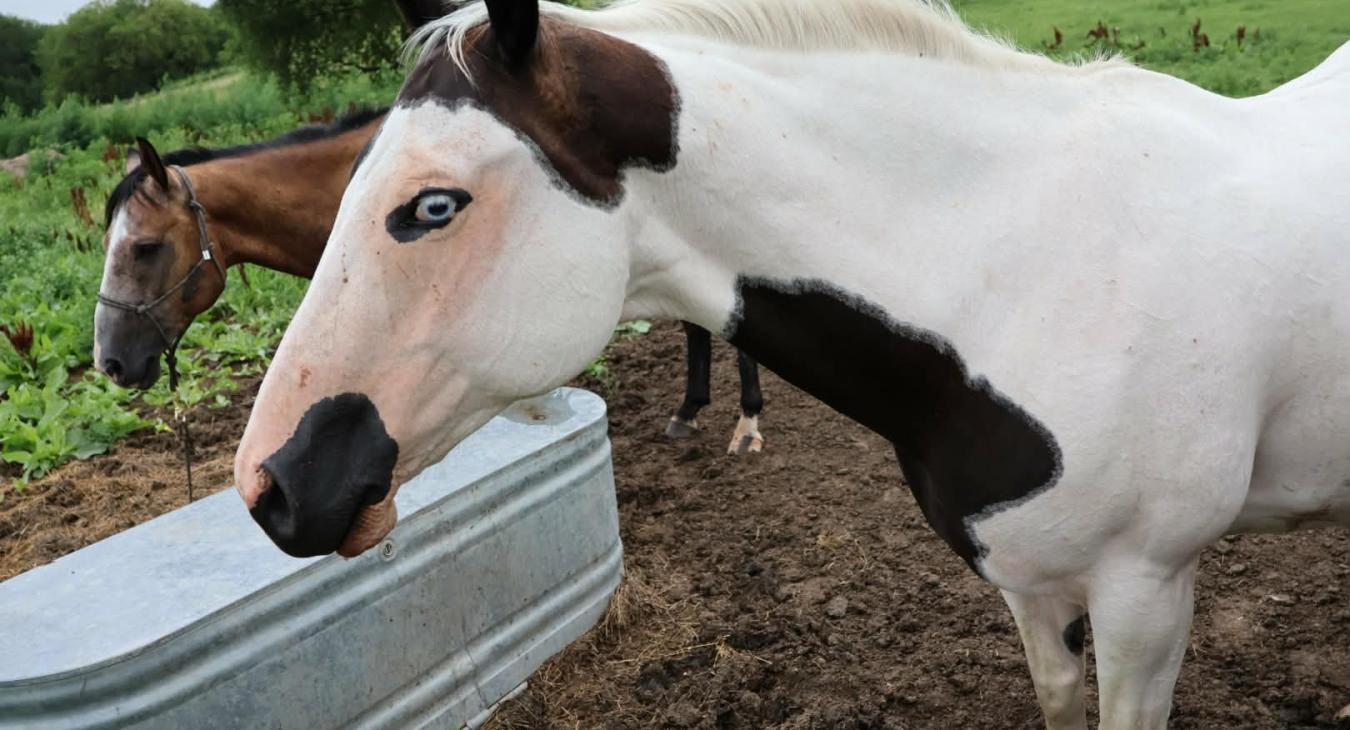
Standing with his hands on the horse's back, he silently communicated with her. A painted pony saunters over, joining the session. Honoring it by addressing each quarter, he then stood in-between the mares, a hand on each of them.
After about 20 minutes of silence, the horses turned away. He followed Widow's directions, walking to the middle of the corral while Widow said a series of prayers. When finished, one of the horses brushed her tail against his face.
After watching from a distance, a gelding walked to him and rubbed his nose against the man.
"He's letting you know that you are OK now," Widow said. "He wouldn't approach before because he was scared of what you were going through. He's not scared anymore. He wants you to know you don't need to be scared, too."
Horses sense a person's trauma and react accordingly, Widow said.
"The reason they don't come up, the reason she didn't go up to you is because whatever you're going through keeps you from doing things," he said. "That's what's caused a lot of stuff in your life that didn't make sense."
Widow's work as a horse therapist came late in life. He knew he didn't always fit in with others, but didn't understand why, Widow said.
When he learned he was a Heyoka, a person who senses others' energy and feelings, it made sense, Widow said.
"People talk about, 'Oh, you gotta have this and you gotta have that,' but it's just like everything in life," he said. "Like, for me growing up, there was a crowd over there, and I always tried to fit in, and I couldn't. Or there's something going on, and how come I'm not part of that? Been like that my whole life, and the main thing is it was like that until my wife died in 2022."
His wife was his partner in all ways possible, Widow said. She was his horse whisperer; she'd round up the ponies and help get them into the trailer on trips, he said.
He lost his wife almost four years ago. It took him three years to work through issues surrounding her death.
Realizing he guides his clients to address issues impacting their lives, it was time to follow his own advice, Widow said.
"I finally did a wiping of the tear, and it really helped me," he said. "I always thought that, 'Hey, I don't need help. I could do it myself, but I knew I had to reach out."
Knowing it was his calling to help others through equine therapy, but, as a Heyoka, feeling others' emotions can be overwhelming, Widow said.
"A lot of times they get to be too much for us, and so that's what makes us not want to go anywhere or do anything, because of that," he said. "So it's not all that."
Regardless, he understands the responsibility passed to him by the ancestors, Widow said.
"Some people get to the point where they say, 'Well, that's enough,'" he said. "But there's still a lifetime to address. When I first came here, I helped a lady. I even gave her a horse. Now, she has more horses."
While he works with people to address trauma through equine therapy, Widow also leads others through sweats, which help resolve issues people have through spirituality. He leads a weekly sweat involving recovering alcoholics and addicts.
"It's awesome work," Widow said. "But, I don't know how to get myself out there."
Regardless, people in need know how to find him. While his calling as a Heyoka challenges his own emotions, Widow knows he's helping others.