
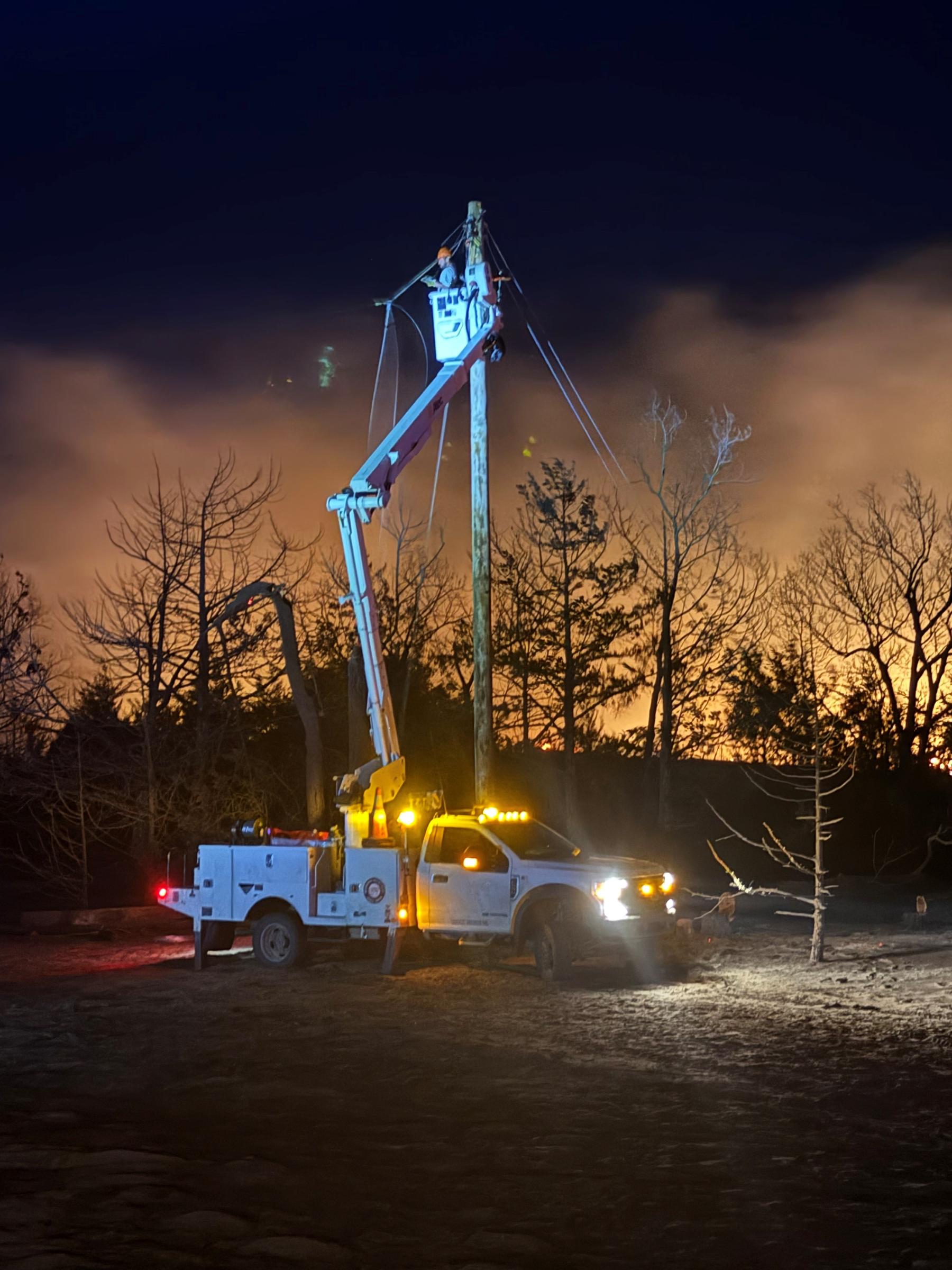
Recent wildfires across Nebraska have served as a strong reminder that fire season can affect more than grasslands and pastures. Along with smoke and heat, wildfires can also lead to power outages that disrupt daily life. In some cases, these outages are planned. Utilities may use what is called a public safety power shutoff, or PSPS, as a last-resort step to help prevent new fires.
A PSPS event happens when electric companies turn off power during extreme fire weather. Conditions such as high winds, low humidity and very dry vegetation can increase the risk that power lines or equipment could spark a fire. While utilities work year-round to reduce these risks by clearing vegetation, upgrading equipment and increasing inspections, there are times when shutting off power is the safest option.
For customers, these shutoffs can come with some warning. Utilities aim to provide notice 24 to 48 hours in advance when possible. However, fire conditions can change quickly, and shorter notice may occur in emergencies. That is why it is important to keep your contact information up to date and review your alert settings each season.
The length of an outage can vary. Some may last only a few hours, while others could stretch over several days. Power is restored only after conditions improve and crews can safely inspect lines and make repairs. Smoke, strong winds, blocked roads and evacuation orders can all delay this process.
Understanding wildfire alerts and warnings is another key part of staying safe. Knowing when to prepare and when to act can make a real difference. As Nebraska continues to face wildfire risks, being informed and prepared helps protect both people and communities.
Fire weather alerts
Red flag warning: Critical fire weather conditions are occurring or expected soon (often within 24 hours).
Fire weather watch: Conditions are dry and favorable for critical fire weather and could become dangerous.