
By Tim Trudell
“Four score and seven years ago our fathers brought forth on this continent, a new nation, conceived in liberty, and dedicated to the proposition that all men are created equal.”
As President Abraham Lincoln’s Gettysburg address, considered by many historians as one of the most-significant speeches ever delivered by an American leader, a young man from Johnson County stood about 10 feet from the 16th president, as he delivered those oft-quoted words.
Fredrik Peterson was about 23 years old as he stood guard over Lincoln. It was just another assignment for the Swedish immigrant, who found his way to the United States at the age of 12.
Enlisting in the Union army twice, Peterson saw action at the Battle of Bull Run, as well as Gettysburg.
Peterson didn’t brag about his time in the military or serving as a guard for Lincoln, said Lois Linke, his great-granddaughter. She authored a book, “Just an Ordinary Man of Long Ago,” to share his story with her family.
“He was patriotic. He was determined,” Linke said. “He went through a lot of hardships, and lived to be 90 years old.”
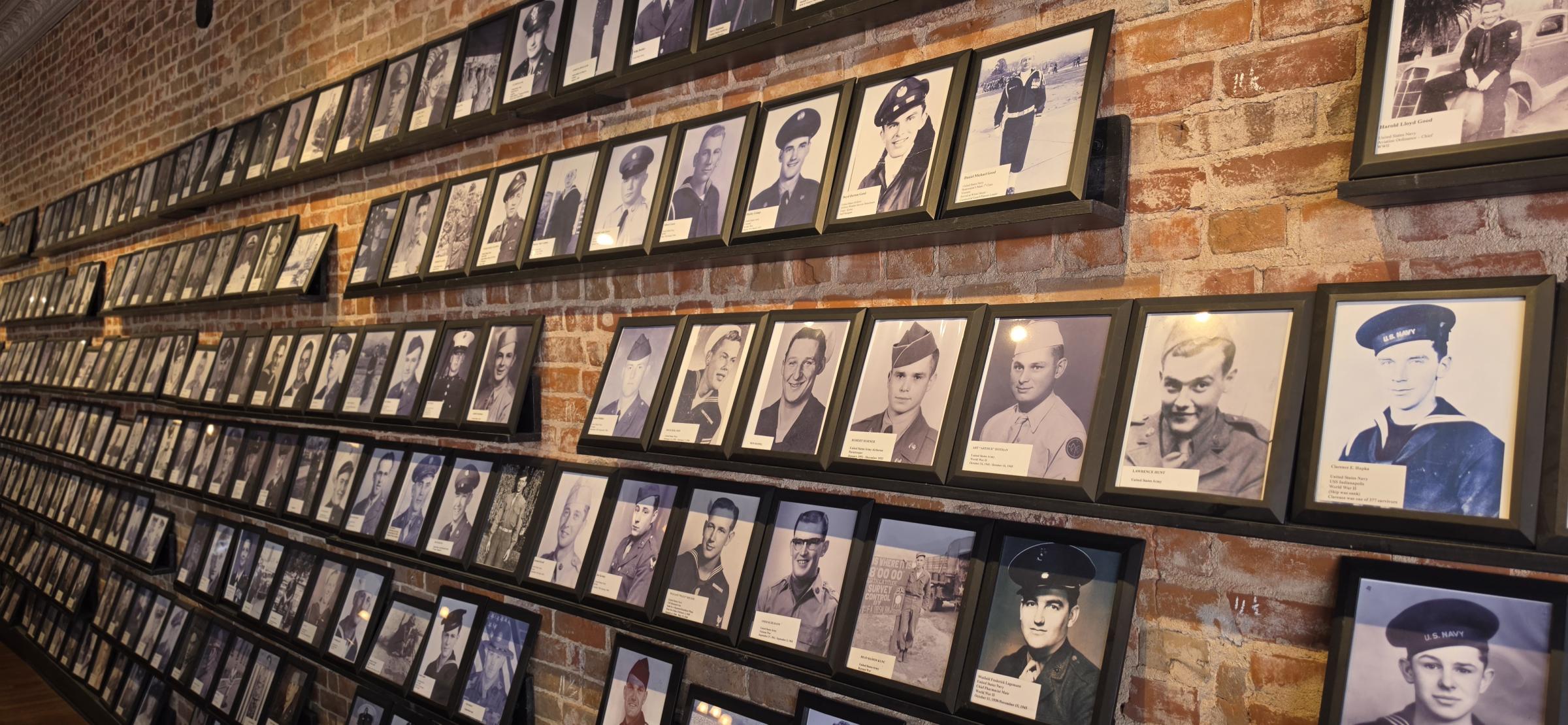
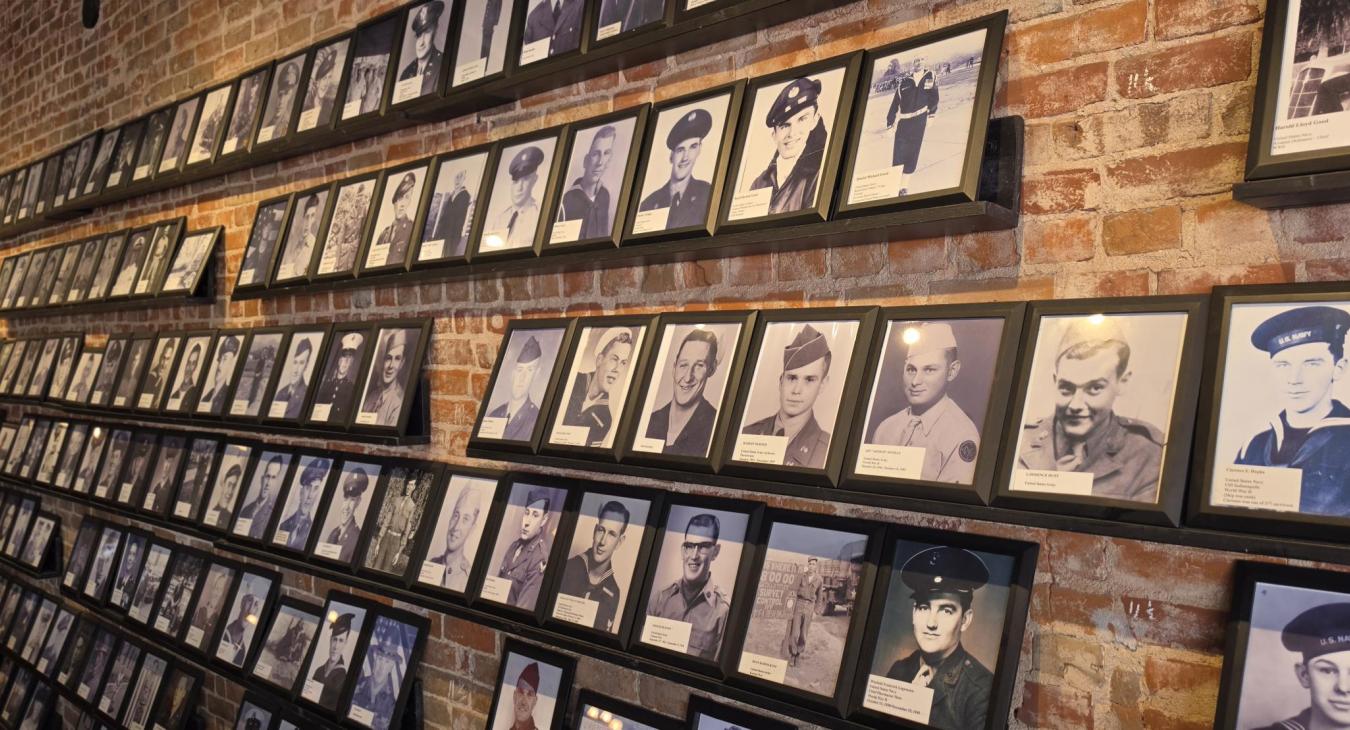
Peterson is one of more than 950 Johnson County veterans featured in 8x10-inch photos on the walls of The Grain Bin restaurant in Tecumseh. The photographs range from five veterans of the Civil War through the Middle Eastern conflicts.
The photo exhibit started in 2009 when Beverly Ramsey, while working in human relations at the local Smart Chicken Plant, was part of a seven-member committee looking for a unique way to honor area veterans during Tecumseh Days.
The idea was an immediate success. The first year, more than 300 photos were submitted, Ramsey said.
The first couple of years, the photos were displayed on poster board at the Johnson County courthouse in Tecumseh. Over the ensuing years, the collection grew to more than 750 photos.
As Ramsey and her husband, Wilbur, planned to open a soda fountain, they decided to display the photos at the store. Photographs were displayed in black frames along a long wall that ran the length of the downtown restaurant, as well as smaller sections.
The photos added to the soda fountain’s popularity.
“We had a lot of people come back and look at their relatives,” Bev Ramsey said. “We had school children come down, and they maybe weren’t so interested, until they got down there, and they maybe saw Grandpa’s picture.”
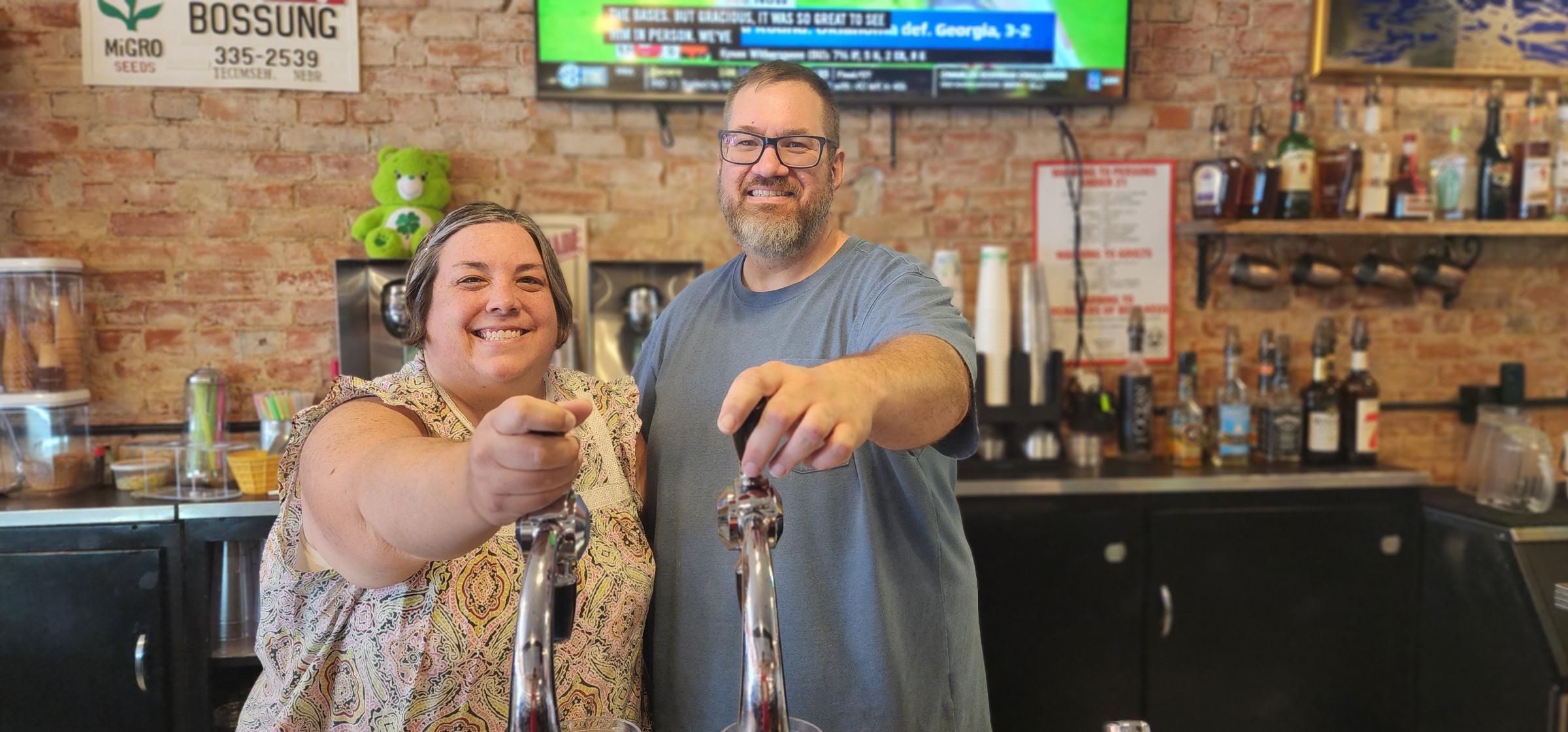
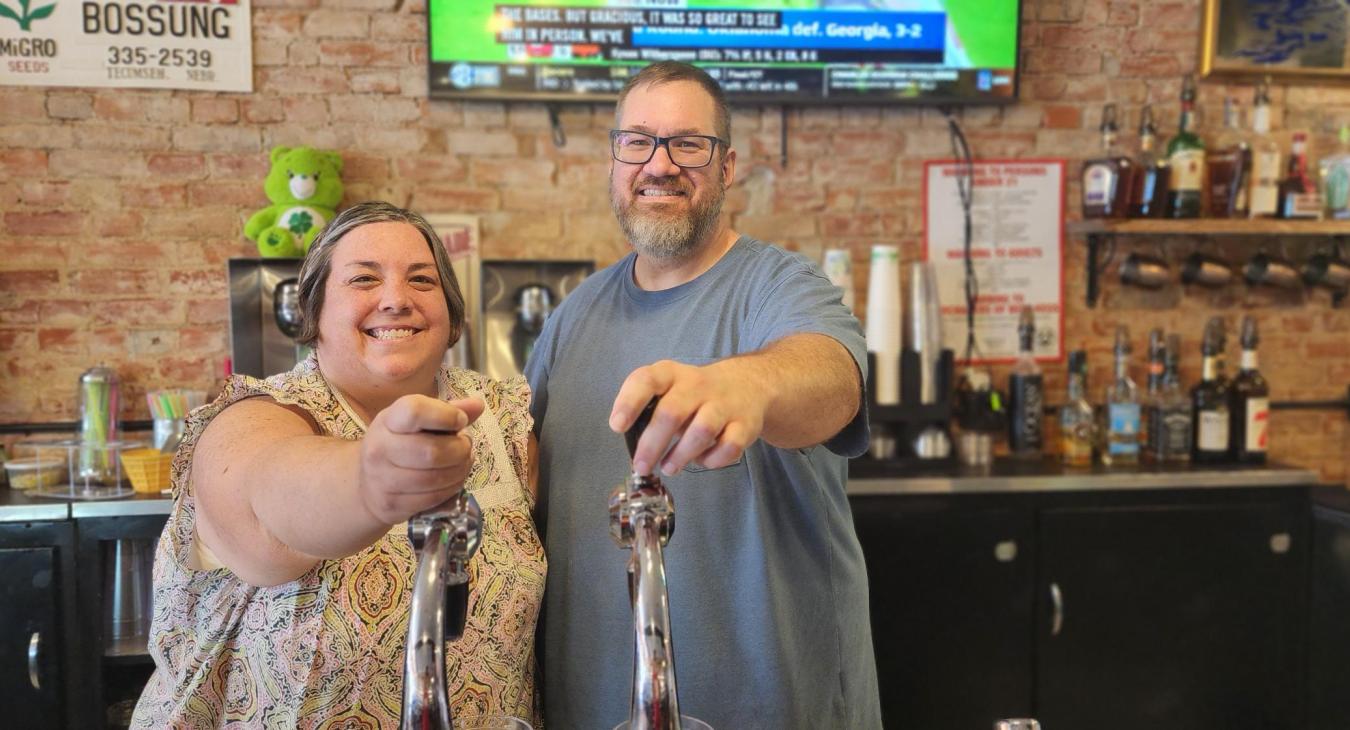
In 2023, the Ramseys sold the restaurant to Mary and Justin Brown, who changed its name to The Grain Bin, and stamped their own style on the eatery.
But one thing remained, the photographs. It was a no-brainer for the Browns to keep the photos as part of The Grain Bin, said Mary Brown.
“What’s going to happen to them?” she said. “The museum cannot take them on, and we have people come in and look at them every day, and we have people bringing us photos they’re wanting to display. They’ll come in and say, ‘Oh, I thought so-and-so was in here. My dad, my grandpa, my uncle.’ So it’s just a nice tribute to the veterans.”
An historically-significant photo is one of Clarence E. Hupka, who was among 316 sailors to survive the sinking of the U.S.S. Indianapolis during World War II.
In July 1945, the cruiser completed a top-secret mission, delivering components for “Little Boy,” one of two hydrogen bombs the United States dropped on Japan to expedite the end of the war.
En route to the Philippines, the U.S.S. Indianapolis was hit by a torpedo from a Japanese submarine.
With about 1,200 sailors aboard, the ship sank in less than 15 minutes, killing 300 crewmembers. The remaining sailors floated in the sea, facing exposure, dehydration, saltwater poisoning and shark attacks.
The Navy learned about the U.S.S. Indianapolis four days after its sinking, when survivors were spotted by the crew of a PV-1 Ventura bomber on patrol. The ship’s sinking resulted in the greatest number of deaths a US Navy vessel has ever experienced.
While she’s honored to display them, maintaining almost 1,000 photos is time-consuming, Brown said. Twice annually, photos need to be reorganized in alphabetical order, she said. Tagging the photos helps keep them in alphabetical order, Brown said.
Located on the oldest block in Tecumseh, The Grain Bin’s building was constructed in 1890. At 136 years old, brick walls are crumbly, so dusting the photo frames and shelves can be challenging, Brown said.
“On the day we’re closed, my blessed mother comes in, climbs a ladder and helps us scooch and dust. That sort of thing,” Brown said.
The restaurant is running out of room to display veterans’ photos, she said.
Acknowledging the importance of the photos to the community, the Browns refuse to turn people away, but they are exploring options. Will the restaurant rotate photos, keeping some in storage?
“I had a thought about somehow archiving them, but I’m not ready for that responsibility,” Brown said. “It would take some undertaking to archiving them, so that, God forbid, we don’t have this business, or there was a fire, or something happened, that we can preserve them. I think the family members have photos, but I just would hate for that kind of a loss.”
The Johnson County Historical Museum doesn’t have room for the photos, Brown said.
The museum has a room set aside to recognize the county’s veterans through a series of displays, along with artifacts, such as Fredrick Peterson’s musket from the Civil War and a Nazi flag confiscated during World War II, said Sarah Williamson, president of the Johnson County Historical Museum.
Knowing people visit The Grain Bin not only for its home-style sandwiches and soups, but also to check out the veterans photos motivates Brown to continue sharing the veterans’ stories.
“I think everyone is important to what we’re doing here,” she said. “Trying to think of a way that we can keep building on this is something that I am glad to do.”